
Zera Yacob in the Cave
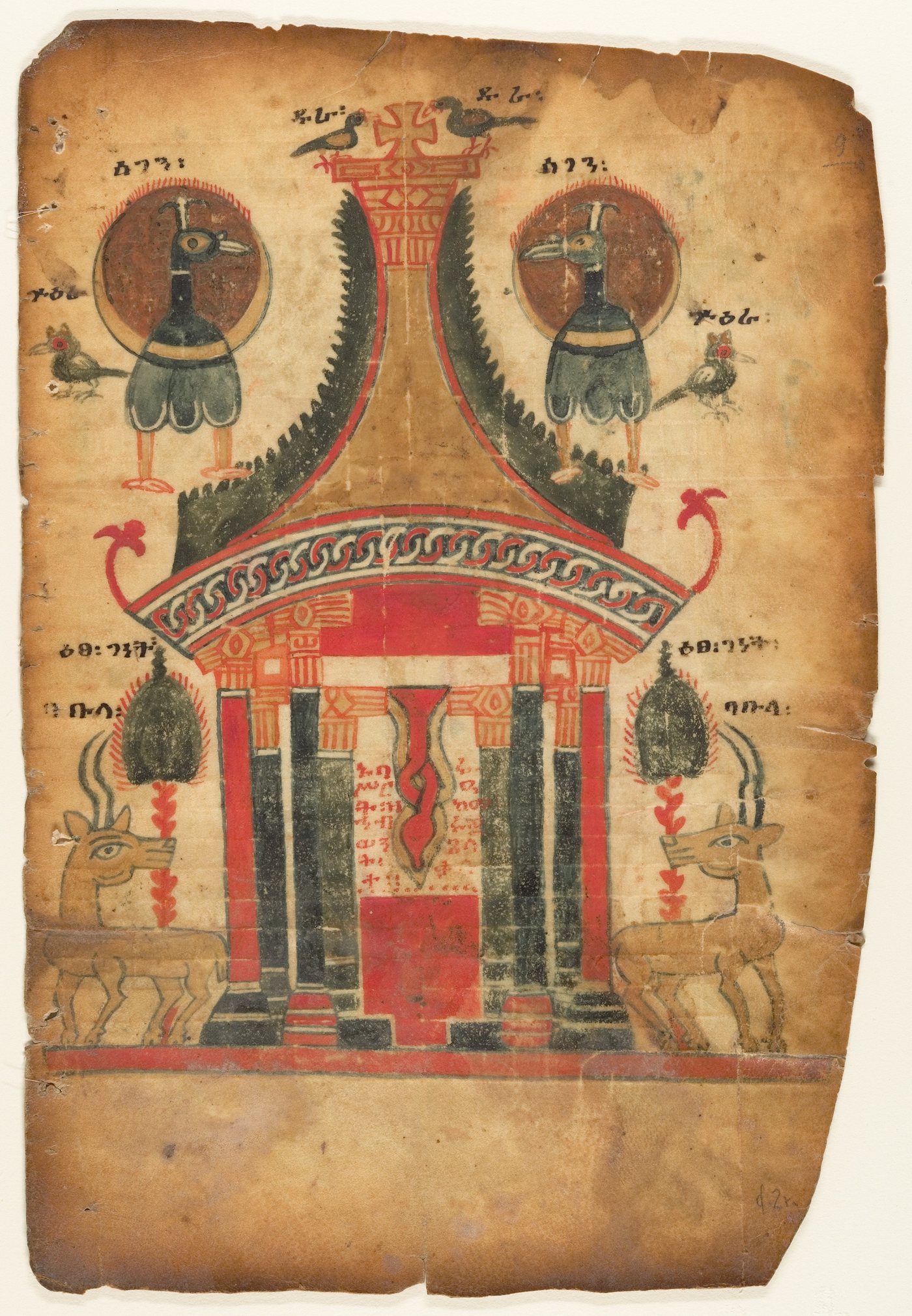
A man sits in a cave and asks something nobody around him asks: is a thing true because it was told to him? The thought answers: look at it yourself. KTT counts that answer as a thought, noticed or not, even when it arrives as a plain decision to doubt. The text said to hold his reasoning is called the Hatata, which means “inquiry” in Ge’ez. The sources read for this article are summaries and scholarly discussion. The treatise itself was not read, and none of them tested whether a thought comes first.
The cave, as the treatise tells it
Zera Yacob lived in the highlands of Ethiopia, around 1599 to 1692. According to the treatise, he went into exile and lived in a cave. There he is said to have worked out a system built on a faculty called lebuna, which summaries render as reason, understanding or intelligence. Every human has it, and it lets a person see the difference between truth and falsity, good and evil. He accepted from scripture and doctrine only what held up under rational inquiry.
The disciple
Years later, in the town of Emfraz, a young man named Walda Heywat studied with him. According to the same summaries, it was Walda Heywat who urged him to write the thoughts down. Walda Heywat then wrote a companion treatise of his own, with more attention to social ethics.
The doubt
The Hatata was brought to attention in 1852 by Giusto da Urbino, an Italian missionary and linguist. In 1920, the scholar Carlo Conti Rossini argued that da Urbino had written it himself. His argument used philology, and it also assumed that such ideas could not have come from the Ethiopian tradition. Claude Sumner later defended the text’s authenticity with linguistic and stylistic analysis, and he argued that the two treatises could not have the same author. Scholars still disagree, and many have compared the Hatata to Descartes’ Discourse on Method of 1637.
What is not known
Who wrote the Hatata is not settled.
Whether the cave is a record of one man’s life or a literary setting is not known.
Whether the thought “look at it yourself” was one thinker’s break with his tradition, or something the tradition already held, is also open. Whoever wrote it, the text records a way of thinking that a reader can examine. It cannot confirm how a particular person thought in the 1660s.