
What “Know Thyself” Meant at Delphi
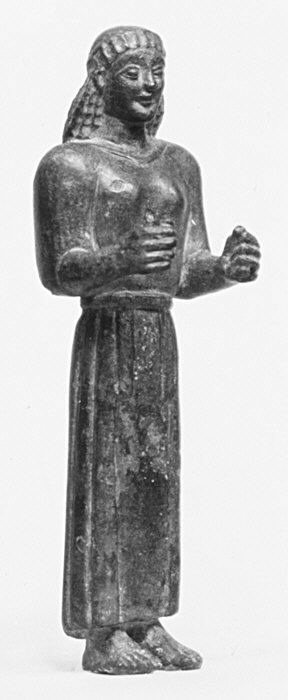
A visitor reaches the forecourt of a temple. Before any question goes to the god, a few short words stand in front of the door. A thought says: that is about me. KTT counts that as a thought, noticed or not, even when it arrives as a small pause on the threshold. The words are “Know thyself,” and what they originally meant is not settled. The sources read for this article are encyclopedic summaries and ancient authors in translation, and none of them tested what such a phrase does in a thinker.
A sentence on a wall
The Greek traveler Pausanias, writing in the second century CE, says that “Know thyself” and “Nothing in excess” were inscribed in the forecourt of the Temple of Apollo at Delphi. Tradition ascribes them to the Seven Sages. “Know thyself” was most often credited to Chilon of Sparta. Another report gives it to the priestess Phemonoë, and says Chilon later took it. The inscription likely began as a popular proverb.
Three ways to read it
In Plato’s Charmides, a character reads it as a greeting from the god and as advice to know one’s place, which he equates with being temperate. In Plato’s Phaedrus, Socrates uses it as a reason to leave myths alone: “I am not yet able,” he says, “to know myself.” In the fourth century BCE, Plato turned the maxim inward, toward what a person is made of. A fragment of Heraclitus, older than Plato, says: “I went in search of myself.”
So the same words have been read as a warning about limits, as a modest confession, and as a task of inquiry. Each reading begins with a different thought about oneself.
What the maxim asks of a thought
Whatever it meant, the instruction is addressed to someone who is about to act. It asks the first thought about oneself to come before the question for the god. That is KTT’s reading, and the ancient sources do not say it.
What is not known
What the Delphic inscription meant to the people who first read it is not known. Every reading above comes from a later writer.
Who first said it is not known either. The ancient sources disagree.
Whether any of the readings changed how a reader thought is also unknown. The sources record what people said about the phrase and not what happened in them when they read it.