
What a Dream Was Allowed to Mean
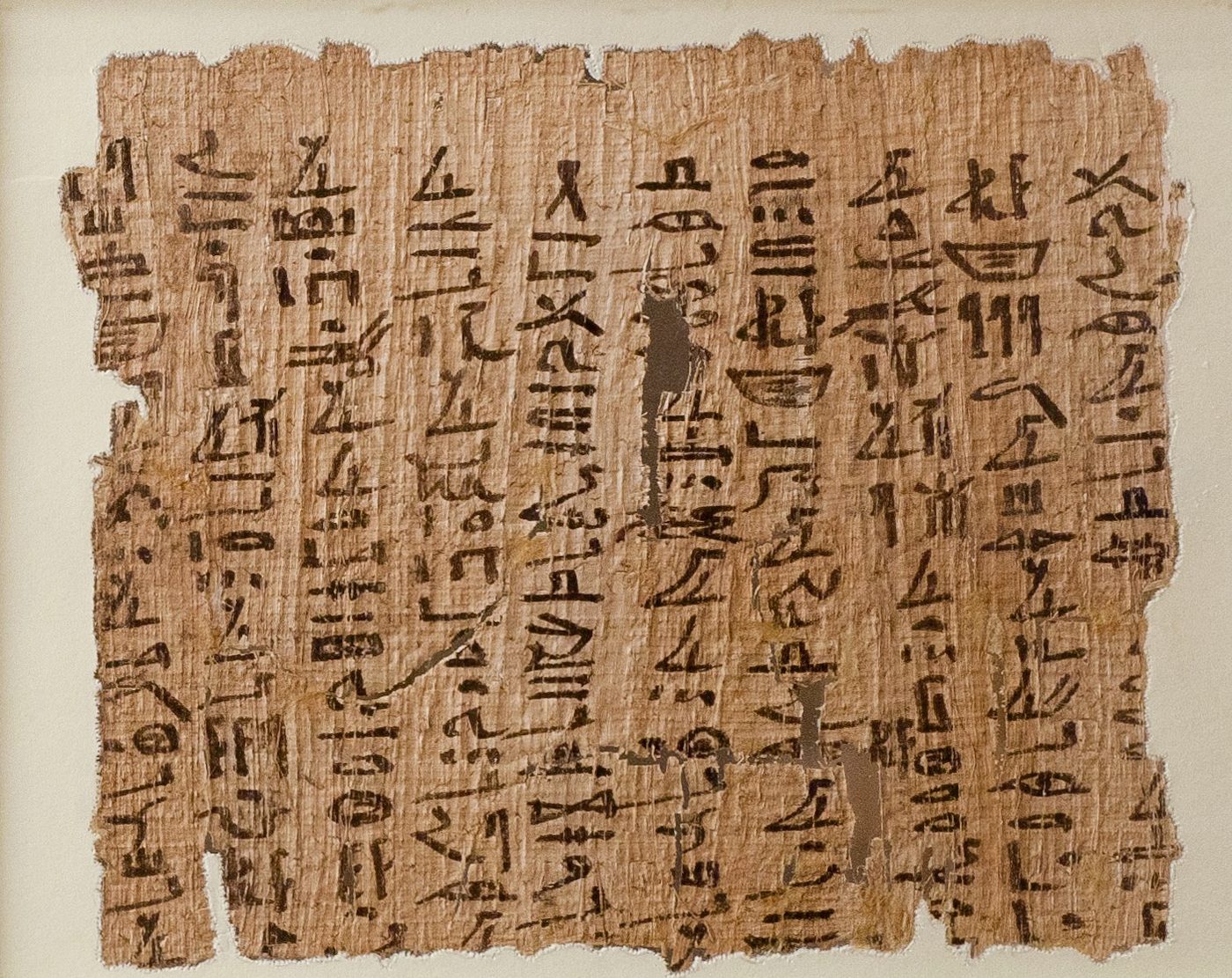
Somewhere around 1220 BCE, in the workers' village of Deir el-Medina, a scribe named Qenherkhepeshef owned a papyrus that did something unusual with the thought that arrives uninvited during sleep: it sorted it.
The document, now called Papyrus Chester Beatty III or the Ramesside Dream Book, survives in fragments, but enough remains to show its structure clearly. Each entry follows the same formula: if a man sees himself in a dream doing or witnessing something specific, the text names the image, then rules on it in a single word, good or bad, then states the outcome that follows. Seeing himself submerging in a river: good, purification from evils. Looking into a deep well: bad, imprisonment. Seeing an ostrich: bad, harm. What survives lists 139 dreams judged favorable and 83 judged unfavorable, organized with enough consistency that scholars treat it less as a diary of someone's actual nights and more as a reference manual, something closer to a lookup table than a journal.
The logic behind many entries was not symbolic in the way modern dream interpretation tends to assume, searching for a hidden psychological meaning beneath the image. Egyptian dream interpretation often worked through wordplay, matching the sound of the dream-image's name to the sound of its predicted outcome. A dream did not require tracing. It required decoding, the way a pun requires recognizing a second meaning sitting inside a familiar sound.
This was not an elite practice reserved for pharaohs, even though pharaohs had their own famous dreams, like the stele recording Thutmose IV's dream of a sphinx promising him kingship. The Dream Book was found in an ordinary scribe's household archive, passed down through at least two subsequent owners who added their own names to it. Whoever consulted it was not seeking a vision. They were looking something up, the way a person today might look up what a symptom could mean, expecting a short, specific answer rather than an open-ended reflection.
What the Dream Book did not do is treat the dream as a private creation of the dreamer's own mind, waiting to be interpreted on its own terms. It treated the dream's content as something closer to external weather, arriving from outside the thinker, requiring an already-fixed key to decode rather than an exploration unique to the person who had it. A thought that occurred unbidden in sleep was not, in this framework, asking to be understood. It was asking to be looked up.