
The Reason Given and the Reason That Worked
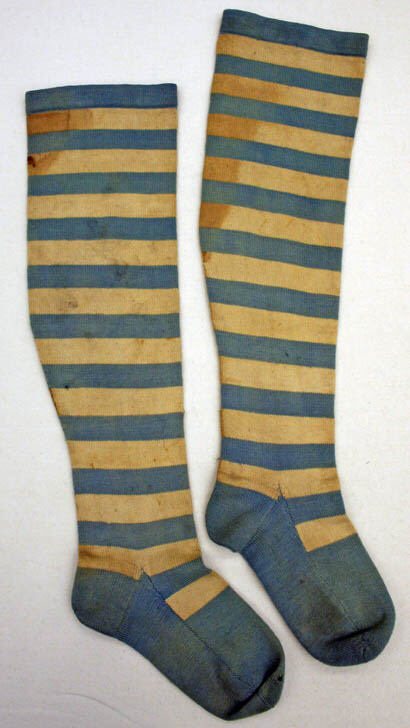
In a shop, four pairs of stockings lie on a table. A thought picks one and, a second later, supplies the reason: this one feels softer. The reason arrives fully formed, in the person’s own voice, and sounds like knowledge. KTT counts both thoughts, the choice and the reason, as thoughts, noticed or not, even when the reason shows up as a plain feeling of certainty. In 1977, Richard Nisbett and Timothy Wilson published a paper that asked whether the reason is the real one. The sources read for this article are the paper in excerpts and later discussion of it.
What they found
Nisbett and Wilson reviewed studies in which people were asked why they had acted or judged as they did. In one of their own, shoppers chose among identical stockings laid out in a row. There was a pronounced left-to-right position effect, and the rightmost pair was chosen most often. The shoppers explained their choices by the quality of the stockings. Asked directly whether position had played a part, virtually all denied it.
Their conclusion was that people often have little direct access to the higher-order processes behind their choices. When asked for a reason, they tend to report plausible causal theories about what influences people in general. They do not report what happened. The authors added that people report more accurately when the real cause is salient and a plausible one.
What the critics said
The paper became one of the most cited in the history of the field. It also drew criticism on theory and method. One critic argued that the authors used inappropriate statistical tests and stated their claim in a form that could not be proven wrong. A later philosophical paper argues that readers have taken it to show more than it does about what a person can know of the choice they make. Some commentators say the paper’s legacy is mixed: much cited, but with no research program that carries it on.
What it means for a thought
The reason that arrives with a choice is a thought like any other. It may be true, or it may be a plausible story. The paper does not say reasons are always wrong. It says that the feeling of knowing why is not evidence that the reason is right.
What is not known
Whether a particular reason is the real one is not known from the inside. The paper’s point is that the person cannot tell by how sure the reason feels.
How far the stocking result holds for everyday choices is open. The critics disagree on that.
Whether the person who gives the reason believes it, or is smoothing over a gap, is also open.